“SERVING YOUR PLATING NEEDS IN THE BEST WAY POSSIBLE”
CAGE CODE: 97F93
(973) 746-1200Tin Plating
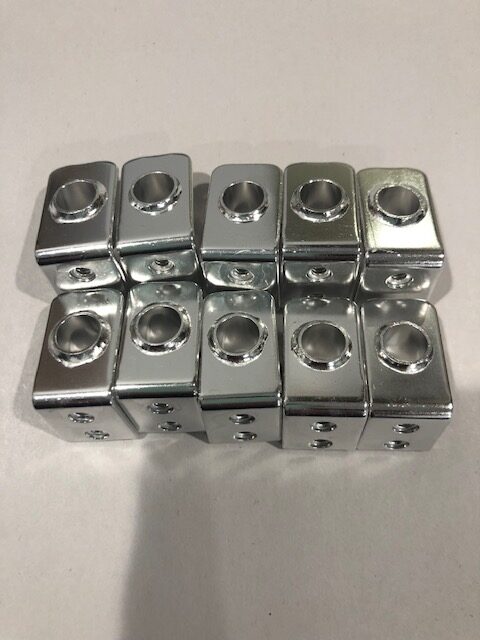
Bright Tin
Tin is a soft metal usually plated over brass or copper where some corrosion resistance along with lubricity and solderability are required. It is widely used in electronic applications where parts must be soldered together. Parts range from small stampings and screw machine parts to larger stampings and fabrications used in electronic applications.
Tin plating is the process of depositing a coating of solderable tin plating onto the surface of a material via an electrical current. Electroplating tin is an extremely cost-effective process. This is due to tin being so readily available and much less expensive than metals such as gold, platinum or palladium.
Tin is a soft, ductile, silvery-white metal that is not easily oxidized in air. It has good conductivity and corrosion resistance while enhancing solderability of substrates that are not otherwise easily soldered to.
Tin Plating Benefits
Tin electrodeposits can produce a whitish-gray color that is preferable when a dull or matte appearance is desired. It can also produce a shiny, metallic look when a bit more luster is preferred. Tin offers a decent level of conductivity, making tin plating useful in the manufacturing of various electronic components. Tin is also FDA approved for use in the foodservice industry. Other electroplating tin benefits include:
- Good contact resistance
- Excellent solderability
- Cost-effective
- Non-toxic
- Highly effective for shielding
Tin Plating Vs Silver Plating
Tin electrodeposits are primarily used for functional purposes such as providing a level of protection or corrosion resistance to a range of items. Tin is extremely cost-effective and is commonly applied to a preliminary coating of copper. Silver, on the other hand, should be utilized when considering increasing a product’s lifecycle. Silver also has a much higher melting temperature and corrosion resistance than tin, however it is much more expensive.
Electroplating Tin Applications
Due to its Solderable tin plating is utilized throughout a wide range of industries, including:
- Military/defense – An effective military coating must address conductivity, insulation, hardness, solderability, and exposure to various chemical environments.
- Aerospace – To ensure operational safety and optimum performance of critical parts and components.
- Electronics
- Food Industries
- Commercial – Our electroplating services for the commercial industry provide metal finishing and corrosion resistance for thousands of unique commercial parts.