“SERVING YOUR PLATING NEEDS IN THE BEST WAY POSSIBLE”
CAGE CODE: 97F93
(973) 746-1200Copper Plating
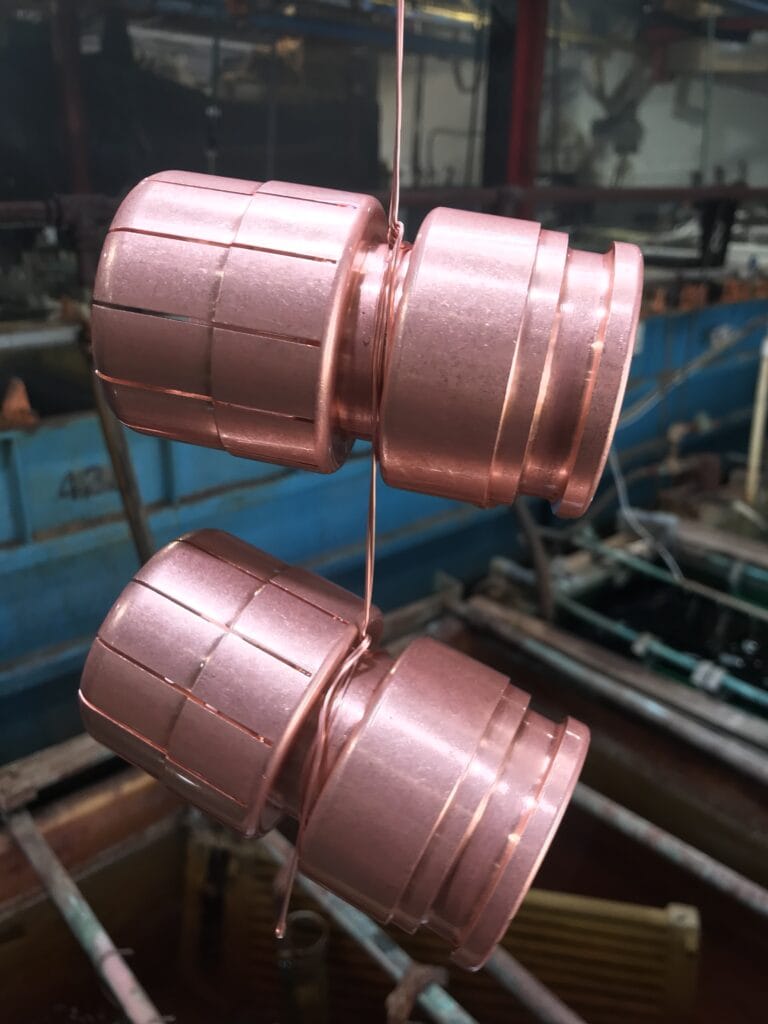
Copper
This process is widely used as an interface between the base metal and the final coating, usually being nickel or silver. It is also used at a thickness of 7/10th to 1 mil as a mask prior to heat treating. We offer this finish for both requirements. Parts include small barrel parts as well as rack parts. The copper has a dull finish.
Copper electroplating offers tremendous benefits for multiple industries because it gives you the best of both worlds. You get the corrosion resistance, conductivity, and other benefits of copper without any compromise on the overall strength.
Excluding the specialty and continuous-strip plating industries, more copper is plated than any other decorative metal except for nickel. There are several reasons for this:
- Copper is an excellent undercoat for subsequent deposits since it’s a good metal to cover substrate defects that can accelerate corrosion. Buffing copper even improves its ability to be an excellent substrate. Copper, and especially buffed copper, can provide an easy-to-plate, highly level and bright substrate.
- Copper is among the least expensive metals and is in relatively stable supply. More leveling can be obtained for the cost of the metal electroplated than for any other metal.
- Copper has a high plating efficiency, and many copper plating processes offer good coverage and throwing power.
- Copper metal is less environmentally hazardous than many other plated metals, although the EPA limits the discharge of copper and copper plating solutions. The waste treatment processes for copper plating solutions and copper-containing rinse waters are well known and in most cases easy to accomplish. Also, many times the copper metal and even the plating bath can be recycled.
- Copper’s high electrical conductivity is exceeded only by silver, making it an excellent and inexpensive coating for products such as printed circuit boards. Used as a topcoat on steel wire, it produces high-strength, conductive electrical cable.
- The percent elongation of most electroplated copper deposits is greater than other electroplated metals. This property helps substrates such as plastic and aluminum withstand thermal expansion without cracking their electrodeposited coatings.
Major Copper Electroplating Techniques
Fundamentally speaking, copper layers need a simple electrolysis setup with the right combination of anode and cathode along with the electrolyte. However, different project requirements may need you to maintain control of the plating rate, or the surface to which it adheres. For that, you’ll need multiple additives and chemicals that can act as levelers, accelerators, or suppressors to ensure that you get the result you need.
The Benefits of Copper Electroplating
Flexibility and Durability
One of the core properties of copper is its malleability. Copper material works perfectly on parts that require further post-processing. You can bend, twist, or perform various other mechanical processes on a copper-plated material and the surface layer won’t come off. This means that this process will not hinder your operations and will increase the lifespan of the part.
Excellent Corrosion Protection
Copper is chemically stable and resists corrosion in most circumstances. This quality makes it a perfect choice for electroplating as the layer of copper can protect the base material that might be more prone to corrosion. In the harshest conditions, even copper corrodes, but it’s a viable option for many regular applications.
Great Conductivity
Copper is an excellent conductor of both heat and electricity. That is one of its defining properties and that’s why its applications are predominantly around the electronics industry. Even if the core metal is not a great conductor, the copper layer can give it that quality and fulfill the requirements of your application.
Excellent Antibacterial Qualities
Another common application of copper applications is in a lab setting. The metal has the natural ability to resist interaction with bacteria or any other micro-organisms. This means that you won’t have to go through the elaborate process of disinfecting surfaces or containers with a copper lining.
Cost-Effectiveness
Despite all these excellent and sought-after qualities, copper remains among the cheapest conductive metals on the planet. Moreover, the process with a copper sulfate solution is also simple, which further increases the viability of this process.