“SERVING YOUR PLATING NEEDS IN THE BEST WAY POSSIBLE”
CAGE CODE: 97F93
(973) 746-1200Chromate on Aluminum
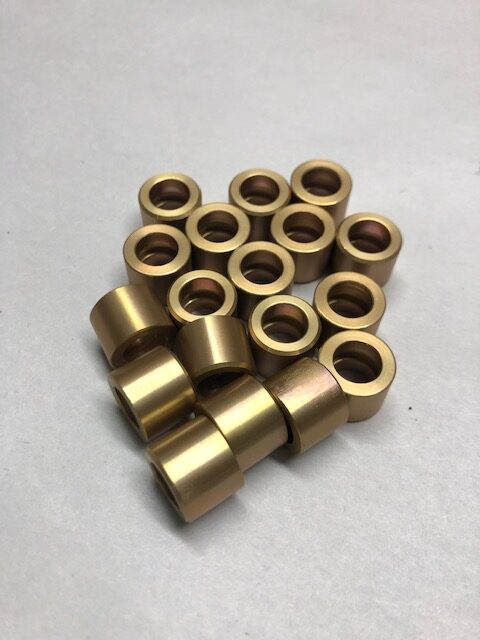
Yellow Chem Film
CHROMATE ON ALUMINUM (also referred to as Chem Film, Iridite and Alodine)
Conversion coatings have an important role in the plating industry because of their enhanced corrosion protection and decorative appeal. These coatings for aluminum have been around since the nineteen fifties. This process is accomplished through an immersion dip in a solution containing chromic acid. Chromate conversion coatings are formed when the chemicals in the chromating solution react with the aluminum dissolving the aluminum oxide and some metal causing a rise in ph at the solution to metal interface. The result is the precipitation of complex hydrous oxides of aluminum, chromium and chromium chromate that form a gel on the surface (providing the ability to seal over scratches). A portion of the hexavalent chromium is reduced to trivalent chromium that precipitates. Hexavalent chromium provides the corrosion protection, however the trivalent chromium is necessary to achieve the proper coating.
Chromate conversion coatings for aluminum were developed during the Korean war. The acceptance of these coating was due mainly as a low cost alternative to anodizing and its desirable properties.
In recent years due to the need to meet ROHS compliance new products have been developed as an alternative to the hexavalent chromate coating. These coatings are primarily whitish clear in appearance and provide excellent corrosion resistance and overall are a good substitute where ROHS compliance is required. Here at Alcaro Plating we are presently using Chemeon TCP-HF to meet these requirements.
Chromate on aluminum is used on a multitude of products. From small stampings, screw machined parts to larger cast and machined housings, as well as extrusions and fabricated
chassis.
Common benefits of chromate on aluminum include:
- Good corrosion protection
- Ability to seal over scratches
- Good paint adhesion
- Low electrical resistance
- Good grounding of electrical components
- Good spot and arc welding